Tag: Reviews

  • Samsung Galaxy S25+: The Middle Child That Gets It Just Right

    The Samsung Galaxy S25+ stands as a testament to Samsung’s commitment to delivering refined flagship smartphones. While it doesn’t introduce groundbreaking changes or fully spec’d out as its bigger sibling the S25 Ultra, it offers a polished experience that caters to both loyal Samsung users and newcomers seeking a reliable device.

    Design and Display

    Maintaining a familiar aesthetic, the Galaxy S25+ features a sleek design with flat aluminium sides and Gorilla Glass Victus 2 on both the front and back. Its 6.7-inch Dynamic LTPO AMOLED 2X display boasts a resolution of 1440 x 3120 pixels, delivering vibrant colours and sharp visuals. The screen supports a 120Hz refresh rate, ensuring smooth scrolling and responsiveness. With a peak brightness of 2600 nits, visibility under direct sunlight is exceptional.

    Performance

    Under the hood, the Galaxy S25+ is powered by the Qualcomm Snapdragon 8 Elite chipset, paired with 12GB of RAM. This combination ensures swift multitasking and efficient performance across applications. The device runs on Android 15 with One UI 7, and Samsung promises up to seven major Android upgrades, highlighting its commitment to long-term software support.

    Camera System

    The rear camera setup includes a 50MP wide sensor, a 10MP telephoto lens with 3x optical zoom, and a 12MP ultrawide lens. While the hardware remains consistent with previous models, software enhancements, particularly in AI-driven image processing, lead to improved low-light performance and more accurate colour reproduction. The 12MP front-facing camera ensures clear and detailed selfies.

    Battery Life and Charging

    Equipped with a 4900 mAh battery, the Galaxy S25+ offers reliable endurance for daily use. It supports 45W wired charging, capable of reaching 65% in just 30 minutes, and 15W wireless charging with Qi2 readiness. Additionally, the 4.5W reverse wireless charging feature allows users to power other compatible devices on the go.

    AI Integration

    A significant highlight of the S25+ is its AI capabilities. Features like the Gemini-powered Cross App Action enable seamless interactions across multiple applications with natural language commands. The AI-driven camera functionalities, such as the “Best Face” feature, automatically select the most flattering shots, enhancing the user experience. Like the rest of its siblings,  much of the improvements on this device have been built around its AI and we can’t say we hate it

    The Samsung Galaxy S25+ may not revolutionize the smartphone landscape, but it excels in delivering a balanced and refined user experience. Its combination of robust performance, long-term software support, and thoughtful AI enhancements make it a compelling choice for those seeking a dependable flagship device.
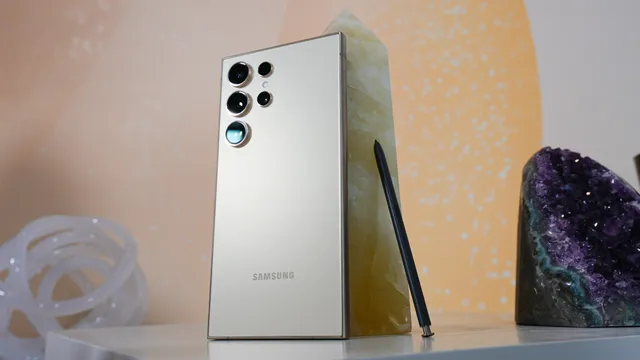
  • Samsung Galaxy S10: The Phone That Time-Traveled to the Future

    In 2019, Samsung dropped a game-changer: the Galaxy S10. While the world was still catching up to edge-to-edge displays and ultrasonic fingerprint sensors, Samsung was already flexing its futuristic muscles. Looking back, it’s clear—the S10 wasn’t just another flagship; it was ahead of its time.

    A Design That Still Turns Heads

    Even in 2024, the S10’s Infinity-O display still holds up. With a sleek, nearly bezel-less design and that iconic hole-punch camera, it looked like something out of a sci-fi flick. Compare it to some budget and mid-range phones today, and you’ll see brands still trying to catch up to that level of polish.

    Ultrasonic Fingerprint Scanner – A Tech Before Its Prime

    While most brands were stuck with optical scanners, Samsung went bold with an ultrasonic fingerprint sensor embedded under the display. It was faster, more secure, and worked even when your fingers were wet—something even some 2024 flagships still struggle with!

    Triple Camera Setup – Samsung’s Crystal Ball Moment

    Back in 2019, three cameras on a phone felt luxurious:

    • 12MP Main Sensor – Sharp and detailed shots.
    • 12MP Telephoto – Because who doesn’t love a good zoom?
    • 16MP Ultrawide – Samsung knew we’d all want to fit more in the frame.

    Fast forward to today, and this setup is still standard. The S10 set the tone for modern smartphone photography, proving that ultra-wide cameras were a necessity, not a gimmick.

    Power-Packed Performance – Exynos 9820/Snapdragon 855

    Let’s talk power. The Snapdragon 855 (or Exynos 9820) inside the S10 was a beast. Even today, with 8GB RAM, it can still handle multitasking, gaming, and everyday tasks smoothly. Some 2024 entry-level and mid-range phones still don’t match this performance.

    Wireless PowerShare – A Feature Even Today’s iPhones Lack

    One of the coolest (and most underrated) features of the S10 was Wireless PowerShare—the ability to charge another phone or accessory just by placing it on the back. Five years later, Apple still hasn’t figured this one out.

    Expandable Storage & The Headphone Jack – Legends Never Die

    Samsung knew what people wanted—a microSD card slot and a headphone jack. Sadly, these are now extinct on most flagships, making the S10 one of the last great phones to offer true flexibility.

    So, Was the Samsung S10 Ahead of Its Time?

    Absolutely. It had features we still rave about today, a design that still looks premium, and innovations that took years for competitors to catch up to. If you still own an S10, you’re holding onto a piece of smartphone history—a phone that was truly built for the future.

    What do you think? Was the Galaxy S10 Samsung’s last truly innovative phone? Let’s hear your thoughts!

  • Samsung Unpacked 2025: Here’s Everything You Need to Know

    The Samsung Unpacked event is always a showstopper, and this year was no different. Known for unveiling flagship devices and groundbreaking updates, Samsung didn’t disappoint in 2025, offering some exciting surprises. Here’s everything we learned:


    One UI: The Ultimate AI Companion

    This year marked a turning point for AI integration. Samsung’s One UI has leveled up to become a true AI companion for everyday life—not just a tool for random tasks. Thanks to Samsung’s collaboration with Google (more on that later), a range of AI-powered features has been rolled out across apps like Samsung Health, SmartThings, and Bixby.

    New additions like the Now Brief, Now Bar, and Evening Brief further showcase how AI is being embedded seamlessly into daily activities.


    Samsung and Google: The Dream Collaboration

    One of the standout moments of the event was the announcement that Galaxy AI is powered by Google’s Gemini AI, the same technology behind the intelligence of Google’s Pixel devices.

    During the presentation, Google executives highlighted how their partnership with Samsung is bringing cutting-edge AI features to the Galaxy lineup. While some of these features—like enhanced AI tools for productivity and personalization—first appeared on Pixel devices, it’s expected they will gradually roll out to other Android brands as well.


    The Snapdragon 8 Elite for Galaxy

    Qualcomm’s Snapdragon chips have come a long way, and the Snapdragon 8 Elite is a testament to that progress. Specifically tailored for Samsung’s Galaxy S series for the third year in a row, this chip is a powerhouse.

    Samsung has addressed concerns about overheating seen in other devices with this chip by improving the vapor chamber in the Galaxy S25 by 40%. The performance gains are significant, with a 40% improvement in NPU (neural processing unit) efficiency, making AI processes smoother than ever.


    Camera and Video: A Mixed Bag

    Samsung’s camera game remains strong, but the lack of hardware upgrades on most lenses has left some fans disappointed. The only noticeable hardware improvement is the ultrawide lens, which now boasts 50MP instead of 12MP.

    However, the real magic lies in software. Samsung’s Pro-Vision Engine (eerily reminiscent of Apple’s ProMotion) enhances content reproduction for creators. For videographers, there’s exciting news: Samsung now natively supports LOG (10-bit HEVC), enabling advanced color grading in post-production. Other features borrowed from the Pixel lineup, like the audio-eraser for cleaning up sound, further elevate the content creation experience.


    Other Specifications

    • RAM Boost: All base models now come with 12GB of RAM—an industry-leading move.
    • Build Materials: The S25 and S25 Plus feature Armor Aluminum 2, while the Ultra gets an exclusive titanium finish.
    • Design: The new models are lighter, have 15% smaller bezels, and maintain the same screen sizes and resolutions as their predecessors.

    The S25 Edge Teaser

    Samsung surprised everyone with a teaser for the Galaxy S25 Edge at the end of the event, giving us Marvel-movie-level suspense. We can’t wait to see what’s in store.


    Controversy: AI Features Behind Paywalls

    Not everything was rosy at Unpacked. By the end of 2025, Samsung plans to lock some Galaxy AI features behind paywalls, sparking debates about accessibility and affordability.


    The 2025 Samsung Unpacked event showcased the company’s push toward AI-driven experiences, powerful hardware, and innovative tools for creators. While there were some areas of disappointment, it’s clear that Samsung is setting the stage for what’s next in tech.

    What are you most excited about from this year’s event? Let us know in the comments!

  • Battle of the Tablets: iPad Air 5th Generation vs Galaxy Tab S9

    The tablet market is brimming with powerful devices, but two names that always stand out are Apple and Samsung. The iPad Air 5th Generation and Galaxy Tab S9 are leading contenders in the mid-to-premium tablet category. But which one is the better buy? Let’s pit them against each other and find out!


    Design and Build Quality

    iPad Air 5th Generation: Apple sticks to its classic premium design, offering a sleek aluminum chassis that feels luxurious in hand. At just 6.1mm thick, it’s impressively lightweight and easy to carry around. It’s available in a range of stylish colors, including Starlight, Space Gray, and Pink.

    Galaxy Tab S9: Samsung’s Galaxy Tab S9 counters with a solid armor aluminum body, making it durable and resistant to scratches. It’s slightly thinner at 5.9mm and even lighter than the iPad Air. Samsung takes things further by including IP68 water and dust resistance—something the iPad lacks.

    Winner: Galaxy Tab S9—Water resistance gives it an edge in durability.


    Display

    iPad Air 5th Generation: The iPad Air features a 10.9-inch Liquid Retina display with True Tone and P3 wide color, offering sharp, vibrant visuals. However, it’s capped at a 60Hz refresh rate, which may not feel as smooth as some competitors.

    Galaxy Tab S9: Samsung hits back with an 11-inch Dynamic AMOLED 2X display. Not only does it provide deep blacks and punchy colors, but it also supports a 120Hz refresh rate for buttery-smooth scrolling and gaming.

    Winner: Galaxy Tab S9—The AMOLED display and 120Hz refresh rate steal the show.


    Performance

    iPad Air 5th Generation: Powered by Apple’s M1 chip, the iPad Air delivers top-tier performance that rivals some laptops. It handles multitasking, gaming, and creative workflows effortlessly.

    Galaxy Tab S9: Samsung equips the Tab S9 with the Snapdragon 8 Gen 2 chip, which is fairly powerful and efficient. While everyday user will not notice the difference, the Apple’s iPadOS is better optimized for tablet use, giving the iPad Air an edge in performance consistency.

    Winner: iPad Air 5th Generation—The M1 chip is a laptop-class and it’s not in the 8 Gen 2’s class and iPadOS optimization takes the crown.


    Software and Ecosystem

    iPad Air 5th Generation: Running iPadOS, the iPad Air offers a seamless experience within Apple’s ecosystem. Features like Handoff, Universal Control, and iCloud make working across Apple devices a breeze. Apps like Procreate and LumaFusion shine on this platform.

    Galaxy Tab S9: Powered by Android 13 and Samsung’s One UI, the Tab S9 offers flexibility, especially if you’re an Android fan. Samsung DeX allows for a desktop-like experience, which is great for productivity. However, the app ecosystem is not as tablet-optimized as Apple’s.

    Winner: iPad Air 5th Generation—Apple’s ecosystem is unmatched for creative professionals and multitaskers.


    Accessories

    iPad Air 5th Generation: The iPad Air supports the 2nd Gen Apple Pencil, which is widely regarded as the best stylus in the market. Pair it with the Magic Keyboard, and you’ve got a solid laptop alternative.

    Galaxy Tab S9: Samsung’s S Pen comes included in the box—huge bonus points! It’s just as responsive as the Apple Pencil, and with the keyboard case, the Tab S9 becomes a versatile productivity device.

    Winner: Galaxy Tab S9—Bundling the S Pen gives Samsung the upper hand in value.


    Battery Life

    iPad Air 5th Generation: Apple promises up to 10 hours of battery life for web browsing and video playback, and it lives up to the claim in most cases.

    Galaxy Tab S9: Samsung also delivers impressive battery performance, matching Apple’s 10 hours. However, the Tab S9 charges faster thanks to 45W fast charging, compared to the iPad Air’s 20W.

    Winner: Galaxy Tab S9—Faster charging gives it the edge.


    Price and Value

    iPad Air 5th Generation: Starting at $599, the iPad Air offers great value for a tablet with M1 power, but adding accessories can make the price climb significantly.

    Galaxy Tab S9: With a starting price of $799, it’s more expensive upfront, but Samsung offsets this by including the S Pen.

    Winner: iPad Air 5th Generation—A lower starting price makes it more accessible.


    Final Verdict

    • Choose the iPad Air 5th Generation if you’re already in the Apple ecosystem or prioritize performance and software optimization. It’s a great choice for creatives and professionals.
    • Choose the Galaxy Tab S9 if you value a better display, water resistance, and included accessories. It’s perfect for Android users who want a premium tablet.

    At the end of the day, both tablets are exceptional in their own right. Your choice will depend on what you value most—be it the Apple ecosystem or Samsung’s feature-packed offering.

    Which one are you rooting for? Let us know in the comments!

  • 7 Days After Galaxy Unpacked: Buds, Flips, Watches & the Apples in Samsung’s Garden

    Last week’s Samsung Unpacked event was packed with exciting—and controversial—releases. While the Galaxy Z Fold 6 and Flip 6 understandably stole the show with their incremental design upgrades and the increasingly impressive Galaxy AI, the Samsung Galaxy Ring flew under the radar. However, it was the Samsung Galaxy Watch Ultra and the Buds and Buds 3 Pro that generated the most buzz. Let’s dive into these devices.

    1. Galaxy Ring

    Smartwatches have become the gold standard for fitness-focused wearables, but smart rings haven’t quite reached mainstream status—yet. With Samsung entering the ring (pun intended), we might see increased adoption. The Galaxy Ring tracks heart rate, sleep quality, workouts, and skin temperature. Available in matte black, silver, and gold, it’s a subscription-free alternative to the dominant Oura ring. Unfortunately, it’s currently only compatible with Samsung devices.

    2. Watch 7 & Watch 7 Ultra

    Samsung is a major player in the smartwatch market with a distinctive design philosophy. While Apple has opted for a square look since the original Apple Watch, Samsung has maintained a more traditional, rounded aesthetic. Until the Watch 7 Ultra, that is. Following Apple’s lead, Samsung released a premium, titanium-clad Watch Ultra packed with features. While Samsung kept the price lower than Apple’s, the design similarity is undeniable. Fortunately, the standard Watch 7 retains Samsung’s iconic round face.

    3. Buds 3 Pro and Buds 3

    Samsung’s Buds 3 Pro and Buds 3 bear a striking resemblance to Apple’s AirPods Pro and original AirPods, respectively. The shift from in-ear to stem-style design is sure to divide fans. The base Buds 3 model lacks active noise cancellation, and both earbuds disappointingly omit Bluetooth multipoint. Come on, Samsung!

    4. Z Flip 6 and Z Fold 6

    We’ve covered the Fold 6 and the Fold lineup in detail HERE. The Z Flip also received some attention. Beyond the enhanced Galaxy AI, there are a few notable changes. The camera ring now matches the phone’s colour, and the Flip features a vapor chamber for improved heat dissipation, benefiting gamers and heavy users.

    These are the devices announced at the Galaxy Unpacked, which one interests you the most?

  • Samsung Galaxy Z Fold 6: The All-in-One Powerhouse

    “But when will it fold” was one of the playful jabs that Samsung threw at Apple in a promotional material for the previous generation of the Fold series and so far, so good, Apple is not folding any time soon.  But this post is not about Apple’s aversion for innovation but about how far the Fold Series have come. At Ogabassey, we are fans of tech utilitarianism; devices that can function in a variety of roles. And among smartphones, no device screams utilitarianism like the Samsung Galaxy Z Fold 6 does-No cap!

    The Samsung Galaxy Z Fold 6 was one of the devices that Samsung released at the Galaxy Unpacked event last week alongside the Galaxy Ring, the Galaxy Buds 7 and 7 Pro, Watch 7, Watch 7 Ultra and the Z Flip 6, the new Fold.

    One of the biggest criticisms against the Fold series has been the repetitive design since the Z Fold 3. Samsung took an “if it ain’t broke, don’t fix it” approach with the Z Fold 6, and it’s hard to argue. The design language remains familiar, but the refinements are welcome and ergonomic. The front screen is now squarer, resembling the Samsung S24 Ultra. The Z Fold 6 is slightly wider but shorter than its predecessor, with a noticeably improved crease and hinge

     On paper, the camera hardware on the Z Fold 5 and the 6 are identical but if there is anything we know about Samsung, there will be improvements on the software side, especially with the plethora of AI options on offer.

     But why should you get yourself the Z Fold 6 or the previous editions?

    • Enhanced Productivity

     With its large, foldable display, the Galaxy Fold is ideal for productivity tasks. You can easily use it for notetaking, editing documents, or even split-screen multitasking. The S Pen support on some models further enhances its productivity capabilities.

    • An All-in-One Device

    It is not unusual to see someone locked into the Apple ecosystem moving around with both their iPhone and iPad. If only there was a device that could function as a mobile phone as well as a tablet; IF ONLY!

    This utilitarian angle is what makes the Fold special. From the first generation to the latest, Samsung has prioritized both design and performance. The Fold 6 boasts the top-of-the-line Snapdragon 8 Gen 3 processor, guaranteeing flagship-level performance. It seamlessly handles productivity, entertainment, and cellular needs.

    • Innovative Design

    The Galaxy Fold’s unique design transforms from phone to tablet, offering a versatile user experience. This design excels in multitasking, allowing you to run multiple apps simultaneously on a larger screen. Plus, it’s a head-turner – a phone that demands attention. If maintaining steeze and composure means anything to you, this is a device for the assignment.

    • Samsung Ecosystem Integration

    If you already have a Samsung device, the Fold will even make your experience better, connect the Samsung Galaxy Buds to your Fold to enjoy high-definition audio with Samsung Scalable Codec {SSC}, enjoy cross-device integration with other Samsung devices, including the Galaxy Tabs or even a Samsung laptop.

    The Samsung Galaxy Z Fold is the device for those who crave functionality, design, innovation, and futuristic technology – all in one. Does that describe you?

  • Peace of Mind on Your Wrist: Unveiling the Life-Saving Features of the Apple Watch

    When Apple released the OG Apple Watch in 2015, many pessimists were convinced that the device was a fad and with time, it would fade into obscurity. They couldn’t have been wrong. The Apple Watch was a hit when it launched. And in 2024, it has remained an unquantifiable success. For many critics (coughs Samsung fans), it has become a fashion statement rather than an actual fitness device. But that is one of Apple’s superpowers, create a device that appeals to people’s fashion sense yet remains supremely functional. However, beyond being an accessory for making fashion statements, the Apple Watch can SAVE YOUR LIFE! Yes, you read that right!

    When was the last time you visited the hospital for even the most basic check-up? Crickets? Yes! That’s what we thought! Now, the Apple Watch (and other health wearables) can not take the place of proper medical checkups, but it will give you on-the-spot feedback before things get really bad, especially during emergencies. Here are 4 ways the Apple Watch can save your life:

    • Heart Rate Monitoring

    Your Apple Watch continuously monitors your heart rate and can alert you if it detects irregularities, such as atrial fibrillation (AFib) or unusually high or low heart rates. Early detection of these conditions can prompt you to seek medical attention before they become serious. When you consider the high number of young people with no prior medical issues that just drop dead, you will understand why having a device that monitors your heart for irregularities is a no brainer in 2024.

    • Crash Detection

    The latest Apple Watch models (Apple Watch Series 8, Apple Watch Series 9, Apple Watch SE (2nd Generation) and the Apple Watch Ultra) come equipped with crash detection, which can identify severe car accidents. If a crash is detected, the watch will automatically call emergency services and provide them with your location. This feature ensures that help is on the way even if you’re unable to call for it yourself.

    • Blood Oxygen Monitoring

    The Apple Watch Series 6 and later models include a blood oxygen sensor that measures the oxygen saturation of your blood2. This feature can help detect respiratory issues early, allowing you to seek medical attention promptly. It’s particularly useful for monitoring conditions like sleep apnea or respiratory infections.

    • Noise Monitoring

    Exposure to loud environments can damage your hearing over time. The Noise app on the Apple Watch monitors the noise levels around you and notifies you if the decibel level reaches a point that could harm your hearing. This feature is particularly useful in workplaces with high noise levels, concerts, or any situation where prolonged exposure to loud sounds is common. By alerting you to hazardous noise levels, the Apple Watch helps protect your long-term hearing health.

    Beyond our list, the Apple Watch is an incredible tool for gym enthusiasts, it can help you record your sets and reps, track your progress and even come with a platform for competing with your friends. Would you like to get the Apple Watch or any other smartwatch? Send us a DM on Instagram

  • A Peek at the Galaxy: 5 Things We Have Learnt About the Newly Announced Samsung Galaxy S24

    Well, most of our speculations HERE turned out to be true. Still, the Samsung Galaxy S24 will have even the most fanatic Apple fan purring… make no mistake, these devices have set the bar for phones in 2024, and it will take something radical, unpredictable, and industry-disrupting to match these achievements, let alone surpass them. No pressure, Apple.

    The Samsung event has come and gone, and one thing is clear: Samsung’s hand is fully in the AI jar, and that leads us to:

    The Galaxy AI

    The new Samsung phones will feature the Galaxy AI, a generative Artificial Intelligence that will provide on-device and internet-powered AI solutions to users. Galaxy AI brings language detection, translation and transcription, advanced video and photo editing and manipulation, and more.

    The Brightest Screen Among the Galaxies

    At almost 1800 nits, the Samsung Galaxy S23 Ultra was already equipped with a very bright screen, but the S24 has taken brightness to near-stratospheric levels with a whopping 2600 nits. Using your phone under the glare of the Lagos sun will be a breeze. The glass protection has also been enhanced with the recently announced Gorilla Glass Armor from Corning. The glassmaker claims the new Armor is four times more scratch-resistant than Victus 2

    A Rival-Inspired Design

    S24

    A wise man once said, ‘Good artists copy, Great artists steal,’ yet we can’t help noticing the similarities between the iPhone and the new S24; Samsung has gone for the flat, boxy design that has characterized the iPhone for a while. The choice to use a titanium frame rather than the customary aluminum is also telling… Not that we are complaining. Overall, beyond these design evolutions, there are few differences between the S23 and the S24 design.

    A Familiar Camera Setup

    Let’s be honest; cameras are arguably one of the most important features for anybody looking to buy a smartphone in 2024, and with the S24, Samsung proved that they understand the assignment. The vanilla S24 and the middle child S24+ kept the same setup as their predecessors. This approach suggests that Samsung is putting a lot of trust in its software processing, which suggests we are in for a treat. The flagship S24 Ultra has a new 200MP main shooter, the same 10MP 3X Telephoto lens as last year, but a new 50MP 5X Telephoto lens, a 12MP ultra-wide camera, and a 12MP selfie cam. Well, the iPhone 15 has a battle on its hands.

    A Modest Approach to Battery

    Samsung has come in leaps and bounds as far as the battery is concerned. It appears the company has decided that, for now, 5000mAh is where the bar is as far as their flagships are concerned (we all remember the Note 7). The S24 has a standard 4000mAh, 4900mAh, and 5000mAh for the S24+ and the Ultra, respectively.

    Will you be getting the S24? Which feature do you look forward to testing the most? Tell us in the comment section.

  • Unveiling the Samsung Galaxy A14: A Budget-Friendly Gem

    In the ever-evolving landscape of smartphones, finding a reliable and affordable device can be a daunting task. However, if your budget hovers around the 200,000 Naira mark, you might just be in luck. Enter the Samsung Galaxy A14 – a smartphone that strikes a harmonious balance between design, durability, and performance.

    Design and Durability: A Visual Treat

    Straight out of the box, the Samsung Galaxy A14 impresses with its sleek design and robust build. The phone features a large Infinity-V Design, providing an immersive visual experience. This design choice not only enhances the aesthetics but also adds a touch of durability to the device.

    Display Delight: Crisp and Clear

    One of the standout features of the A14 is its 1080p PLS LCD. Delivering the same display quality as its predecessor, the Samsung A13, this phone ensures a visual treat with vibrant colors and sharp images. Whether you’re streaming videos, browsing the web, or scrolling through social media, the A14’s display won’t disappoint.

    Your Perfect Daily Driver: Exynos 850 Processor

    Under the hood, the Samsung Galaxy A14 is equipped with the Exynos 850 processor. While it may not be a powerhouse, it provides a reasonable performance for a budget phone, adept at handling fundamental tasks with ease. However, it’s worth noting that this phone might not be the ideal choice for gaming enthusiasts, so don’t expect to conquer COD Mobile on the A14.

    Endurance Extraordinaire: 5000mAh Battery

    One of the most impressive aspects of the A14 is its substantial 5000mAh battery. This powerhouse allows users to expect over 7 hours of usage on a single charge. Whether you’re a heavy multitasker or just need a phone that can keep up with your daily activities, the A14’s battery life will surely impress.

    Capturing Moments: A Modern and Capable Triple Camera Setup

    In the era of smartphone photography, the Samsung Galaxy A14 holds its ground with a capable triple camera setup. The 50MP main sensor delivers decent photos, especially in well-lit environments. While it may not compete with flagship devices, the A14’s camera system certainly exceeds expectations for its price range.

    Budget-Friendly Excellence: Sub 200,000 Naira Category

    Considering the high price of smartphones these days, the Samsung Galaxy A14 remains  an excellent choice for budget-conscious buyers. It offers a compelling combination of design, display, performance, and battery life, making it a solid contender in its price segment.

  • Samsung Galaxy S20 Ultra in 2023: Is it still Worth it?

    Many observers have argued that the Smartphone industry appears to have plateaued. Beyond the foldables (which remain a niche segment), there seems to be no innovation, with many smartphone makers offering little to no remarkable upgrades. With a phone like the Samsung Galaxy S20 Ultra released in 2020 still holding its own three years later, there might be some truth in that assertion. The Samsung S20 Ultra is now available for a fraction of its original price, and if you are in the market for a phone that does it all, here are 5 reasons why the Samsung S20 Ultra might be the phone for you.

    First Impression: A Stunning Display

    One of the standout features of the Samsung Galaxy S20 Ultra is its massive 6.9-inch Dynamic AMOLED 2X display. This screen delivers a vibrant visual experience that’s perfect for consuming content of all kinds, from videos to games and more. The colours are rich and accurate, and the contrast is simply stunning. Plus, with a 120Hz refresh rate, the user experience is incredibly smooth, making scrolling and transitions feel effortless.

    Performance: Exynos 990 vs. Snapdragon 865

    The performance of your smartphone is crucial, especially if you’re a heavy user. The Samsung Galaxy S20 Ultra is powered by either the Exynos 990 or the Snapdragon 865 processor, depending on your region. While both processors are powerful, the Snapdragon variant tends to outshine its Exynos counterpart, particularly in demanding tasks and power. So, if you’re all about speed and efficiency, you might want to consider the Snapdragon version.

    Camera Capabilities: 108MP Excellence

    For photography enthusiasts, the Samsung Galaxy S20 Ultra is a treat. It boasts a camera setup with a whopping 108MP primary sensor, which is quite impressive, even when compared to newer models. This sensor captures sharp, detailed photos that can rival many dedicated cameras. The S20 Ultra debuted Samsung’s class-leading 100X Zoom capabilities.

    This is the camera your friends will want to use to capture pictures and videos at events.

    Battery Life: All-Day Power

    The S20 Ultra houses a massive 5000mAh battery that easily delivers over 7 hours of usage on a single charge. This means you can use your phone throughout the day without worrying about finding a power source. Whether you’re browsing, streaming, or gaming, this phone has the stamina to keep up. The 45w charging capability also ensures you can top up quickly.

    Price Point: Affordable Luxury

    Now, let’s talk about the price. At just 280,000 naira, the Samsung Galaxy S20 Ultra offers an excellent value proposition. You’re getting a top-tier phone with a fantastic display, solid performance, and a versatile camera, all at a relatively affordable price compared to some of its competitors.

    The Samsung Galaxy S20 Ultra is a premium smartphone worth considering. It offers a stunning display, powerful performance, exceptional camera capabilities, long battery life, and all of this at a reasonable price. If you’re looking for a device that can keep up with your daily needs and more, the S20 Ultra might be the perfect fit.

    If you would like to get the Samsung S20 ultra or any other smartphone at an affordable price with the opportunity to spread your payment across 3-12 months, send us a DM via Ogabassey on Instagram.

    Do you think the S20 Ultra is worth buying in 2023? Tell us in the comment section